Cervical Cancer: What Every Woman Should Know


Every year, hundreds of thousands of women around the world hear the words, “You have cervical cancer.”
For many of these women, the diagnosis comes too late.
In 2022 alone, an estimated 662,301 women were diagnosed with cervical cancer worldwide, and 348,874 women died from the disease. The burden, however, is not shared equally. Women living in countries with fewer healthcare resources experience significantly higher rates of cervical cancer and are more likely to die from the disease.
What makes cervical cancer particularly important to discuss is that we already have many of the tools necessary to prevent it. Through HPV vaccination, routine cervical cancer screening, early detection, and treatment of precancerous changes, many cervical cancer cases and deaths can be prevented.
For our first Wellness Wednesday, Scion of Tabitha Foundation is taking a closer look at cervical cancer: what it is, what causes it, the symptoms women should know, who may be at greater risk, and how prevention and early detection can save lives.
First, What Is Cervical Cancer?
The cervix is the lower portion of the uterus that connects the uterus to the vagina. Cervical cancer develops when cells in the cervix begin changing and growing abnormally. These changes usually happen gradually rather than appearing suddenly.
In many cases, cervical cells first undergo precancerous changes. When these abnormal cells are detected through cervical cancer screening, they can often be monitored or treated before they develop into invasive cancer. This is one of the reasons routine screening is so important.
A woman does not have to feel sick for abnormal cervical changes to be present. Early cervical cancer and precancerous changes may cause no noticeable symptoms at all, meaning screening can identify potential problems long before a woman realizes something may be wrong.
What Causes Cervical Cancer?
The overwhelming majority of cervical cancers are associated with persistent infection with certain types of human papillomavirus (HPV). According to the World Health Organization, approximately 99% of cervical cancer cases are linked to infection with high-risk HPV.
HPV is an extremely common group of viruses that can be transmitted through intimate skin-to-skin and sexual contact. Having HPV does not mean someone has cervical cancer, nor should an HPV infection be treated as something shameful. Most sexually active people will be exposed to HPV at some point in their lives, and in most cases, the body's immune system clears the infection naturally.
The concern arises when certain high-risk HPV infections persist. Over time, persistent infection can cause abnormal changes in cervical cells. Without detection and treatment, some of these changes may eventually progress from pre-cancer to cervical cancer.
According to the World Health Organization, this process typically takes approximately 15–20 years in women with normal immune systems. That long progression provides an important opportunity to detect and treat abnormal cells before invasive cancer develops.
HPV: What You Should Know
HPV is extremely common.
HPV can be transmitted through intimate skin-to-skin and sexual contact.
Most HPV infections clear naturally without causing cancer.
Certain types are considered high-risk HPV because persistent infection can lead to cancer.
Having HPV does not mean you have cervical cancer.
HPV vaccination can protect against HPV types responsible for many cervical cancers.
Cervical CanCer by the Numbers
The statistics surrounding cervical cancer demonstrate both the scale of the disease and the inequalities surrounding who is most affected.
Globally, in 2022:
Approximately 662,301 women developed cervical cancer.
Approximately 348,874 women died from cervical cancer.
Cervical cancer remains one of the most commonly diagnosed cancers among women worldwide.
The overwhelming majority of cervical cancer deaths occur in low- and middle-income countries.
These disparities make cervical cancer more than a women's health issue. It is also an issue of health equity. Access to vaccination, screening, diagnosis, and treatment can dramatically influence whether cervical cancer is prevented, detected early, successfully treated, or allowed to progress.
Cervical Cancer in Nigeria
For Scion of Tabitha Foundation, understanding the cervical cancer burden in Africa, and particularly in Nigeria, is especially important.
A 2026 peer-reviewed analysis using GLOBOCAN 2022 data estimated that Africa experienced approximately 125,699 new cervical cancer cases and 80,614 cervical cancer deaths in 2022.
Among African countries, Nigeria recorded the largest absolute number of both cervical cancer cases and deaths.
Nigeria's 2022 Cervical Cancer Burden
13,676 estimated new cervical cancer cases.
7,093 estimated cervical cancer deaths.
Approximately 19 women dying from cervical cancer every day.
Age-standardized incidence rate: 26.2 per 100,000 women.
Age-standardized mortality rate: 14.3 per 100,000 women.
Cervical cancer was the second most commonly diagnosed cancer among Nigerian women, behind breast cancer.
Behind these numbers are mothers, daughters, sisters, wives, friends, professionals, caregivers, and members of communities. They represent women whose lives and families can be profoundly affected by a disease for which effective prevention and early-detection tools already exist.
What Are the Symptoms of Cervical Cancer?
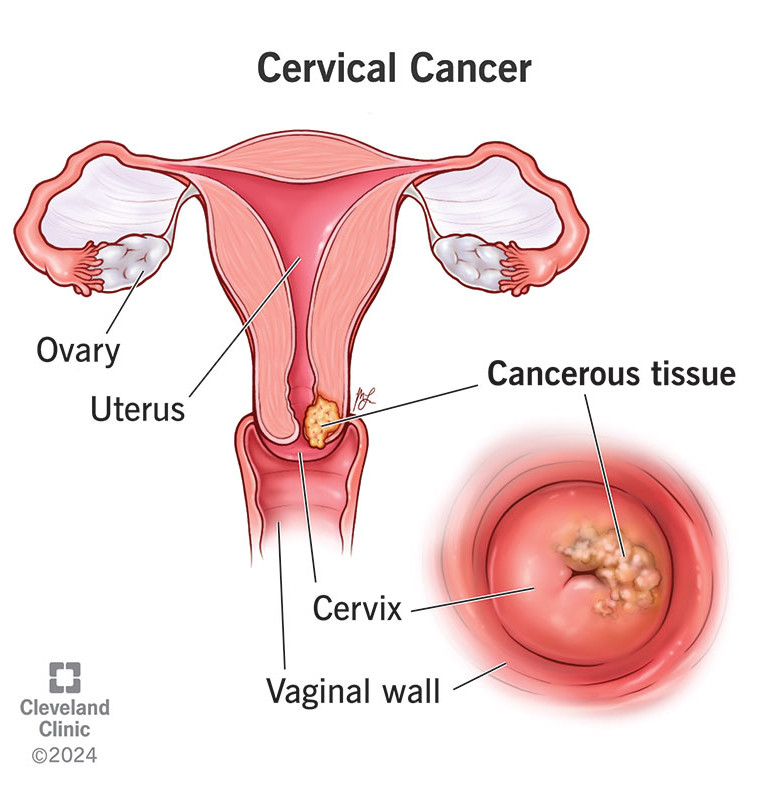
One of the most important things to understand about cervical cancer is that early cervical cancer and precancerous cervical changes may cause no noticeable symptoms at all. Someone can feel completely healthy while abnormal changes are occurring, which is why waiting until something feels wrong is not an effective substitute for appropriate cervical cancer screening.
When symptoms do occur, they may include:
Vaginal bleeding after sexual intercourse
Bleeding between menstrual periods
Bleeding after menopause
Menstrual bleeding that is heavier or lasts longer than usual
Unusual or persistent vaginal discharge
Pelvic or lower abdominal pain
Pain during sexual intercourse
Experiencing one or more of these symptoms does not automatically mean someone has cervical cancer. Many other medical conditions can cause similar symptoms. However, unusual bleeding, persistent pain, or other concerning changes should not be ignored and should be discussed with a qualified healthcare professional.
Who Is at Greater Risk?
Persistent infection with high-risk HPV is the primary cause of cervical cancer, but several factors can increase a person's likelihood of developing the disease.
Risk factors can include:
Persistent infection with high-risk HPV
Smoking
Having a weakened immune system
Living with HIV
Not receiving recommended cervical cancer screening
Limited access to follow-up care after an abnormal screening result
Women living with HIV experience a particularly significant disparity. According to the World Health Organization, women living with HIV are approximately six times more likely to develop cervical cancer than women without HIV.
Can Cervical Cancer Be Prevented?
In many cases, yes. Cervical cancer is considered largely preventable because healthcare providers can intervene at several points before invasive cancer develops.
Three strategies are especially important:
1. HPV Vaccination
HPV vaccines protect against high-risk HPV types responsible for cervical cancer and several other HPV-related cancers. Vaccination works best when administered before exposure to HPV, which is why many national vaccination programs prioritize children and adolescents.
Nigeria introduced HPV vaccination into its routine immunization program, with a major focus on girls ages 9–14. Vaccinating girls before likely exposure to HPV can significantly reduce their risk of developing cervical cancer later in life.
Importantly, the benefits of HPV vaccination are supported by real-world evidence. A 2024 population-based study published in The BMJ examined England's national HPV vaccination program and found substantial reductions in cervical cancer and severe precancerous cervical changes among women who had been offered vaccination when they were younger.
2. Routine Cervical Cancer Screening

Vaccination does not eliminate the importance of screening. Cervical cancer screening allows healthcare professionals to identify high-risk HPV infection or abnormal cervical cells before invasive cancer develops.
Common screening methods include:
Pap test (Pap smear): Examines cells collected from the cervix for abnormal cellular changes.
HPV test: Detects high-risk HPV types associated with cervical cancer.
Co-testing: Uses both HPV testing and a Pap test.
Screening recommendations can vary based on age, medical history, previous screening results, immune status, country, and current clinical guidelines. Women should therefore follow the recommendations of qualified healthcare professionals and health authorities appropriate to their circumstances. Most importantly, do not assume that feeling healthy means screening is unnecessary. Screening is designed to detect changes before symptoms appear.
3. Following Up After an Abnormal Result
An abnormal Pap or HPV test does not necessarily mean someone has cervical cancer. Depending on the results, a healthcare provider may recommend additional testing, repeat screening, closer monitoring, or treatment of abnormal cervical cells.
Precancerous cervical changes can often be treated before they progress into invasive cervical cancer. An abnormal screening result should therefore not automatically create panic, but it should never be ignored.
The Inequality Behind Cervical Cancer

Cervical cancer reveals something much larger about women's health. Where a woman lives can dramatically influence whether she has access to the vaccine that may prevent the disease, the screening that may detect it, and the treatment that may save her life.
Research examining cervical cancer globally has consistently found a disproportionate burden in lower-resource countries. The World Health Organization reports that the overwhelming majority of cervical cancer deaths occur in low- and middle-income countries.
Several barriers contribute to these disparities, including:
Limited access to HPV vaccination.
Lack of routine cervical cancer screening.
Cost of medical services.
Limited awareness of cervical cancer and HPV.
Delays in diagnosis.
Difficulty accessing treatment after diagnosis.
Shortages of trained healthcare professionals and appropriate medical facilities.
These disparities mean that many women are not dying because medicine does not know how to prevent or treat cervical cancer. Some are dying because the prevention, screening, and treatment tools that already exist are not reaching everyone equally.
Could Cervical Cancer One Day Be Eliminated?
The World Health Organization believes cervical cancer can eventually be eliminated as a public health problem. To move toward that goal, WHO established its global 90–70–90 targets for 2030:
90% of girls fully vaccinated against HPV by age 15.
70% of women screened using a high-performance test by age 35 and again by age 45.
90% of women identified with cervical disease receiving appropriate treatment.
The ultimate goal is to reduce cervical cancer incidence to fewer than 4 new cases per 100,000 women per year.
Achieving these targets requires more than having vaccines and screening technology available. Women and girls must actually be able to access them. This means cervical cancer elimination is not solely a medical goal; it is also an educational, economic, and health-equity goal.
What We Want Women to Remember
If you take anything away from this Wellness Wednesday, remember:
Cervical cancer is largely preventable.
Persistent infection with high-risk HPV causes almost all cervical cancers.
Having HPV does not mean that you have cervical cancer.
Early cervical cancer and precancerous changes may have no symptoms.
HPV vaccination can help prevent cervical cancer.
Routine cervical cancer screening can identify problems before invasive cancer develops.
An abnormal screening result does not automatically mean cancer, but appropriate follow-up is important.
Knowledge gives women an opportunity to act. Learn your screening history, ask questions about cervical cancer prevention, speak with a qualified healthcare professional about the screening recommendations appropriate for you, learn whether you or the young people in your care are eligible for HPV vaccination, and share accurate information with the women around you.
Sometimes awareness begins with one conversation, and sometimes that conversation can help save a life.
A Message from Scion of Tabitha Foundation
At Scion of Tabitha Foundation, we believe empowering women also means ensuring they have access to information that allows them to make informed decisions about their health and well-being.
Through Wellness Wednesday, we are creating space for accessible, evidence-based conversations about health issues affecting women and girls in our communities. Cervical cancer is an important place to begin because we already possess many of the tools necessary to change its story.
A future in which fewer mothers, daughters, sisters, and friends are lost to cervical cancer is possible. Reaching that future begins with ensuring that women know their risks, understand their options, and have equitable access to prevention, screening, and treatment.
References
Falcaro, M., Soldan, K., Ndlela, B., & Sasieni, P. (2024). Effect of the HPV vaccination programme on incidence of cervical cancer and grade 3 cervical intraepithelial neoplasia by socioeconomic deprivation in England: Population based observational study. BMJ, 385, e077341. DOI: 10.1136/bmj-2023-077341
Huang, J., Deng, Y., Boakye, D., et al. (2022). Global distribution, risk factors, and recent trends for cervical cancer: A worldwide country-level analysis. Gynecologic Oncology, 164(1), 85–92. DOI: 10.1016/j.ygyno.2021.11.005
Singh, D., Vignat, J., Lorenzoni, V., et al. (2023). Global estimates of incidence and mortality of cervical cancer in 2020: A baseline analysis of the WHO Global Cervical Cancer Elimination Initiative. The Lancet Global Health, 11(2), e197–e206. DOI: 10.1016/S2214-109X(22)00501-0
Geographic and demographic patterns of cervical cancer in Africa using GLOBOCAN 2022. (2026). BMC Cancer. DOI: 10.1186/s12885-026-16000-7
International Agency for Research on Cancer. (2024). Global Cancer Observatory: Cancer Today (GLOBOCAN 2022). World Health Organization.
World Health Organization. (2026). Cervical cancer. World Health Organization.
Medical Disclaimer
The information provided through Scion of Tabitha Foundation's Wellness Wednesday series is intended for educational and awareness purposes only and should not be used as a substitute for professional medical advice, diagnosis, or treatment. Screening and vaccination recommendations may vary based on age, medical history, location, and individual circumstances. Please consult a qualified healthcare professional regarding your personal health needs.
Comments